Well Water Without Electricity: How to Get Water From Your Well When the Power Goes Out
A winter storm, or a shutoff on a hot windy day, can leave a rural house in Idaho dark for longer than the town down the highway. If your water comes from a well, the taps go quiet with the lights. The water is still in the ground. The machine that lifts it has stopped.
This note is for households, not for a business plant. It compares the usual ways to get well water with the power off. It does not size a pump for your place. A licensed well contractor and, for any generator tied to the house, a licensed electrician do that from your well log and the label on the pump.
Forecasts and cold-weather warnings belong on the National Weather Service winter page. This note does not restate weather statistics.
Why the well stops
University of Nebraska–Lincoln Extension describes the usual private system as a drilled well with an electric submersible pump and a pressure tank. The submersible hangs down in the water and pushes water up the pipe. Some shallower wells use a jet pump instead. That motor sits above ground, in a basement or a well house, and it is still an electric pump.
The Water Systems Council’s wellcare sheet on power failures says it plainly: when the electric supply is interrupted, so is the service from the well pump. Neither a submersible nor a jet pump runs on stored pressure alone.
Nebraska Extension also says that without power the pump cannot put more water into the line. Whatever is already in the pressure tank is what you still have under pressure.
What is left in the pressure tank
The tank is not a cistern. Nebraska Extension says its job is to hold a reserve so the pump starts and stops less often, and to cover short peaks of use. The gallons painted on the tank are the size of the vessel. The water you can actually draw is smaller. Their table, credited to the Midwest Plan Service, calls that amount usable water storage, or drawdown.
Two examples from that table, for a diaphragm or bladder tank:
- A 20-gallon tank on a 40-to-60 psi switch: 5 gallons of usable water.
- A 32-gallon tank on the same 40-to-60 switch: 8.5 gallons.
Their worked example for an older style of tank is in the same range: a 30-gallon galvanized tank on a 20-to-40 psi switch holds about 5.1 gallons you can use. A higher switch setting gives less drawdown from the same tank. Read the switch setting on the cover. Do not open the switch. Nebraska Extension says it is connected to power and that homeowners should not adjust it.
The Water Systems Council uses a different scale for ordinary life in the house. It says an average family of four uses 400 gallons a day for all indoor purposes, from drinking to laundry and cooking. Five gallons in a pressure tank is not that day. For an emergency, the same sheet says to store at least one gallon per person per day for at least three days, mainly for drinking and for flushing a toilet by hand, and to replace that stored water every six months.
So the first move in an outage is small. Fill a few pitchers from the tap while pressure remains, then stop treating the well as if it were still on. Pour flush water into the toilet bowl from a bucket so the tank on the toilet does not try to refill from the well.
Read the well log before you buy anything
Idaho wells are drilled under a permit, and the Idaho Department of Water Resources says construction is done by a driller it licenses. The driller’s report is the record of that hole. IDWR’s Well Construction Search includes well size and depth, depth to water, and flow rate for most reports from July 1987 on. The tag on the casing is a metal plate, a “D” and seven digits, fixed to the pipe that sticks out of the ground.
Three numbers matter more than the brochure on a pump:
- Drilled depth. How far the hole goes. This is not the same as how far down the water sits.
- Static water level. How far it is from the ground down to the water when the pump is resting. Wellowner.org, from the National Ground Water Association, says to keep that measurement with the construction record, taken when the well has not been pumping. Nebraska Extension notes that in a drought the water level can fall far enough that a pump set too high is no longer under water. A log from the year the well was drilled can be out of date. A contractor can measure the level you have now.
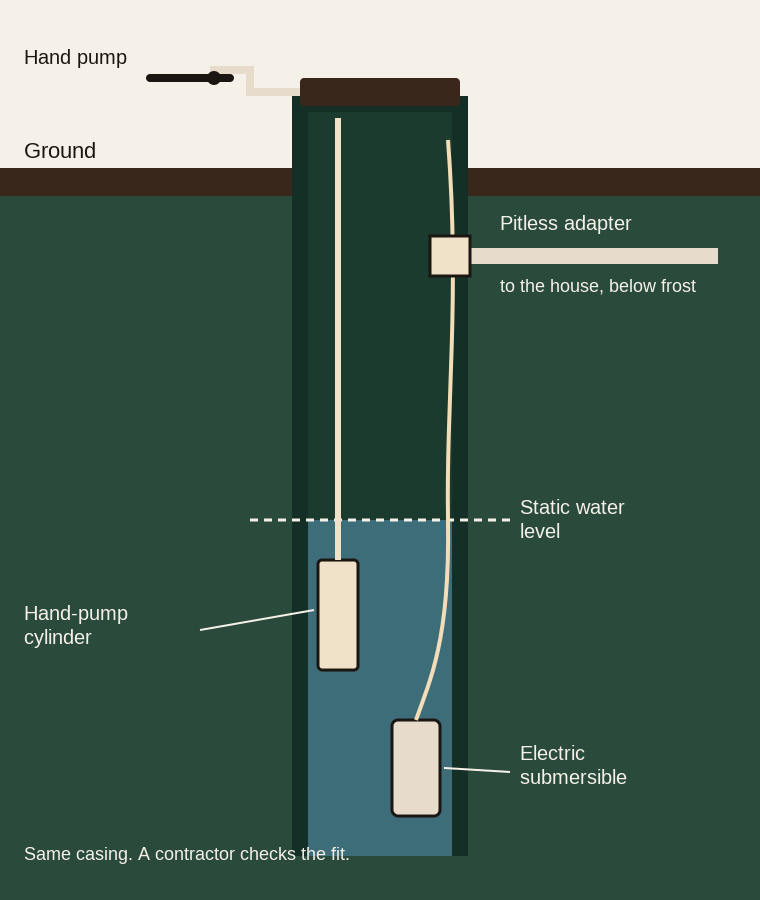
- Casing size. On an NGWA wellowner podcast, driller Gary Hix describes a common pitless-adapter well as a pipe about five, six, or maybe eight inches across, standing about one to two feet above the ground. The exact size is on your log. It decides whether a second pump can share the hole.
A pitless adapter is the fitting that sends water out through the side of the casing underground, below the frost line, so the line to the house is not exposed. Hix says the pressure tank and controls are often some distance from the well, and that a pitless adapter set at the right depth is the part that does not freeze. The cap on top is not a hatch for experiments. Gases can collect in a well pit, and the CDC says not to enter one.
If the job puts tools down the casing, pulls the electric pump, or changes the seal, hire a licensed well contractor. If it connects a generator to the house wiring, hire a licensed electrician. Those are different trades.
Ways to get water, compared
Costs below appear only where a public source states them. A blank cost cell means that source did not publish a price.
| Option | Fits when | What has to be true | Who does the work | Cost a source states |
|---|---|---|---|---|
| Shallow hand pump (lift or pitcher) | Water is close to the surface. | Portland General Electric says lift pumps are typically used on wells less than 25 feet deep. Deeper than that, the effort to raise the water gets impractical. Your static level, not the brochure, decides. | A well pump contractor. PGE says to call one before you install a hand pump. | Not stated as a dollar range. PGE calls the deeper piston style relatively inexpensive and still dependent on who is pumping. |
| Deep-well hand pump in the same casing | You want a no-electricity backup beside the submersible. | PGE says a piston pump can serve much deeper wells, up to 300 feet, because the piston pushes from down in the water instead of sucking from the top. The casing has to have room next to the electric pump. The contractor reads the log. | Licensed well contractor. This is not a cap you open and plumb on a Saturday. | No single public price. It is built to the depth and the casing. |
| Well bucket or bailer | A long outage, and only if there is a clear path to the water. | A bailer is a cylinder on a line. It needs open casing down to the water. A submersible, its pipe, and its cable may already fill that path. | A contractor if anything has to come out of the hole. Do not pull a pump yourself to make room. | Not stated. |
| Solar pump or solar-charged backup | You want water without a fuel can, and you can store what the sun pumps. | Nebraska Extension lists a solar collector as one way a remote pump can be powered. PGE describes batteries that can charge from solar, with a limited run time until they are charged again. A solar pump is matched to static level, pumping level, and how much you use. | A well contractor or the supplier who will size it to the log. Do not buy a kit from a depth you guessed. | PGE says battery backup costs more than a fuel generator. It does not publish a dollar figure. |
| Generator for the existing pump | You want the pump you already have, for as long as you have fuel. | Most pumps are hardwired. PGE says you generally cannot plug the pump into a generator outlet. You need a transfer switch. Match voltage and the pump’s starting surge, not just running watts. | A licensed electrician for the connection. A well contractor can help size the generator to the pump. The CDC says a licensed well contractor, electrician, or power company should choose the size so the pump is not damaged. | The Water Systems Council gives an example: a small portable generator just for the submersible, at an average cost of about $1,000. A whole-house unit is a different purchase. They do not price it. |
Set each one up at a high level
Hand pumps
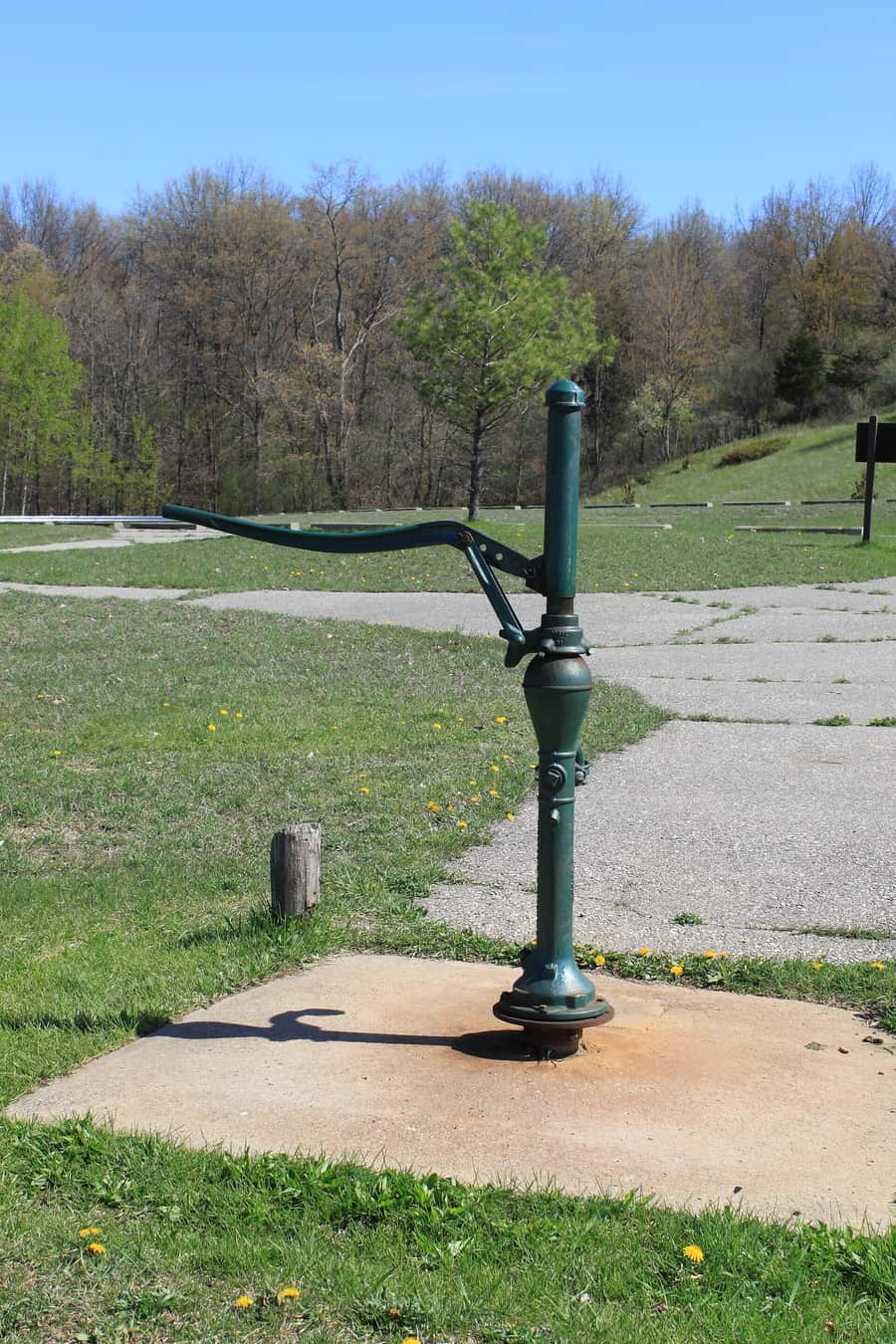
A shallow lift pump and a deep piston pump are different machines. Portland General Electric describes the lift pump as a handle that fills a piston and then forces water up the pipe, and says that style is typically for wells less than 25 feet deep. The piston pump puts the pumping barrel down in the water. PGE says that kind can be used to about 300 feet and takes less strength, and that it can be installed in a home well alongside the electric pump so it is there when the power fails.
“Alongside” only works if the casing has room. Bring the contractor the log: casing diameter, static water level, and whether a submersible is already in the hole. A pitless adapter and the drop pipe take space too. If the static level is far below what a suction pump can lift, a pitcher pump on the cap will not reach the water, no matter how long the handle is.
A bailer
A bailer is a bucket you can send down a casing and pull back up. It is a slow way to get drinking water, and it only works when the path is clear. On a short outage, leave the electric pump where it is and use stored water. The Water Systems Council’s advice for a power failure, if you have no other supply ready, is stored water and a plan made ahead of time, plus a licensed contractor when you want a built-in backup.
Solar
Nebraska Extension names a solar collector next to a wind turbine and a fuel generator as ways a remote pump may be powered. That is a design job. The supplier needs the static level, the level while pumping, and how many gallons a day you actually use. PGE’s battery option can sit indoors, because it does not make exhaust, and it can be recharged from panels or from a generator run for a short time. The limit they name is runtime: when the battery is empty, pumping stops until something charges it.
A generator
The Water Systems Council says a gas or diesel generator can keep the well running, and gives two scales. A small portable unit, in their example about $1,000 on average, aimed at the submersible alone. Or a whole-house generator that also carries refrigeration and heat. For size, their example is that a submersible typically needs a generator of at least 3,500 watts, and that a larger pump needs more. Treat 3,500 watts as their illustration, not as the number on your pump.
PGE adds the part that trips people. Well pumps often need 220 volts, in the same class as a dryer circuit. Some need only 110. Wattage depends on the pump, and the starting surge can be up to six times the running watts. The pump label, or the installer who set it, is the source of those numbers. The CDC says a licensed well contractor, an electrician, or the power company should pick the generator size so the pumping equipment is not damaged.
Generator safety
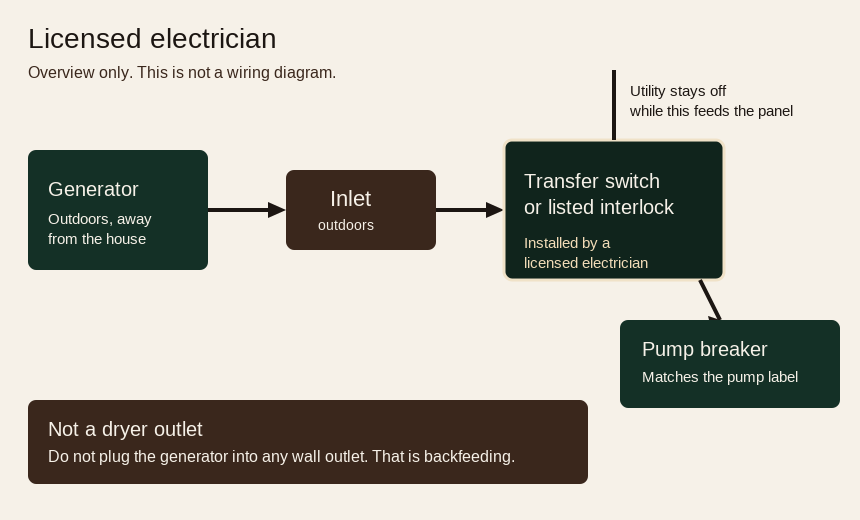
A well pump is usually hardwired. The safe path is a connection a licensed electrician installs, so the generator and the utility cannot energize the same wires.
OSHA’s portable-generator fact sheet says never to attach a generator directly to a building’s electrical system unless a qualified electrician has installed it with a transfer switch. Without that, the generator can energize lines for a long distance and put utility workers and neighbors at risk. The Red Cross says the same job: if you want the generator tied to the house wiring, an electrician installs a transfer switch to the National Electrical Code and to state and local rules.
A listed interlock on the panel is the other device electricians use for a portable generator. It is there so the main breaker and the generator breaker cannot be on together. Ask the electrician which one belongs on your panel. Do not buy the kit and land it yourself.
The Consumer Product Safety Commission names the mistake directly: never power the house by plugging the generator into a wall outlet. That practice is called backfeeding. A dryer outlet is a wall outlet. CPSC says backfeeding can electrocute utility workers and neighbors on the same transformer, and it bypasses some of the protection built into the house.
Carbon monoxide is the other half. CPSC says never run a generator inside a house, garage, crawlspace, shed, or similar space, even with fans or with doors and windows open. You cannot see or smell CO, and you can be exposed without smelling exhaust. If you feel sick, dizzy, or weak, get to fresh air immediately. Put in battery-operated CO alarms, or plug-in alarms with battery backup, and test them.
The CDC’s private-well guidance says to keep a generator and other gas equipment at least 20 feet from doors, windows, and vents. OSHA adds that the machine needs about 3 to 4 feet of clear space on the sides and above so it can breathe, and that it should not sit where exhaust can enter a door, window, or vent. Twenty feet is not a promise. The CDC notes that wind can still carry exhaust indoors, which is why the alarm inside the house matters.
Keep the generator dry. CPSC says that if you must run one in wet weather, do it under an open canopy on a dry surface, with dry hands, and still outdoors, away from openings. Refuel only when the engine is off and cool. OSHA lists fire from refueling, and from stored fuel, among the generator hazards.
After the outage, or after a flood
A dark afternoon is not the same event as floodwater over the wellhead.
Power loss, and the well was not flooded. When the power returns, the Water Systems Council says to run the tap for a few minutes so you are drawing fresh water. If the water is discolored, smells off, or shows some other sign of contamination, stop using it, switch to stored water, and have it tested and treated.
The CDC tells you how to notice a loss of pressure, on its page about private wells after conditions that can knock out power. Turn on a faucet. If the water spurts because air is escaping, the well and the house plumbing lost pressure. Do not drink it until it has been tested. Test for bacteria at a minimum. If the stream is steady, the well has pressure. Still look and smell. A new color, or an earthy or burnt smell, is a reason to treat the water as unsafe. No smell does not prove the water was untouched. Turn the pump’s breaker off before anyone inspects the equipment, so you are not shocked.
Floodwater reached the well, or you think the well took in surface water. The EPA’s flood guidance for private wells is the short version: do not turn the pump on, and do not drink or wash with the water. People get sick from flooded wells. Swift water can loosen hardware, bend casing, and carry sediment into an uncapped well. After the water is gone and the equipment has dried, a qualified electrician, well contractor, or pump contractor checks the wiring before anyone restores power. If the control box was under water, every electrical part has to be dry first.
The CDC says the safest drink after a disaster is bottled water until you know the well is clean. If the water smells like fuel or chemicals, boiling and disinfection will not make it safe. Call the local health department and keep using bottled water.
Disinfection of the well itself is a contractor’s job. The CDC says so because the work is hazardous: electricity, debris, and chlorine. The agency’s page walks through a drilled-well method for after you have checked with local authorities, including unscented household bleach and a wait before you sample. This note does not copy that bleach table. Follow the CDC disinfection page or, better, have the contractor do it. The EPA says drilled, driven, and bored wells are best disinfected by a well or pump contractor because it is hard for an owner to do it thoroughly.
After disinfection, the CDC says to wait at least 7 to 10 days before a test, so the chlorine is gone. Until the test comes back, boil the water at a rolling boil for one minute, or use another source. Ask the lab for total coliform and either E. coli or fecal coliform. If those are absent, the CDC says the water can be considered safe to drink, then test again in 2 to 4 weeks and again in 3 to 4 months. If coliform shows up, disinfect again and test again. If it keeps showing up, call the health department.
In Idaho, well questions about construction and the log go to the Department of Water Resources. Questions about whether the water is safe to drink go to your public health district. The CDC also points people to the state health department and to EPA’s Safe Drinking Water Hotline, 800-426-4791, for how to find a certified lab.
Store some water anyway
Every option above can fail on the night you need it. The hand pump is not installed yet. The generator is buried in snow. The contractor cannot get up the road. Stored water is the supply that does not care.
Ready.gov’s kit page asks for one gallon of water per person per day, for drinking and sanitation. The 72-hour kit guide walks through that figure, including the FEMA brochure’s three-day minimum and the extra drinking water for heat, hard work, children, nursing mothers, and people who are ill. The kit builder multiplies the one-gallon rule for the household you enter. Children count as people. The human gallon is not a pet formula.
The Water Systems Council’s emergency figure matches that gallon, for at least three days, and adds a six-month refresh. In a Mountain West winter, keep those jugs where they will stay liquid. A gallon frozen solid in an unheated shed is not a drink. How to wash the jugs, what a filter does not remove, and the bleach table are in when the faucets stop.
If you run cattle or horses, PGE’s planning note is separate from the human gallon: up to 20 gallons per large animal per day, with cows given as the example. Confirm that with the animal’s own needs. It is not a dog-and-cat number.
A bulk storage tank on the well system is a longer project. The Water Systems Council describes one sitting beside the pressure tank, kept fresh because water moves through it, then feeding by gravity when the power is off. That is a contractor’s design, sized to the house, not a stock tank you plumb in during the storm.
Sources
- University of Nebraska–Lincoln Extension, G2153, Private Drinking Water Wells: Operation and Maintenance for Mechanical Components (2012). The usable-water table is credited there to the Midwest Plan Service.
- Water Systems Council, wellcare, “Wells: What to Do When the Power Fails.”
- Portland General Electric, “Powering Wells During a Power Outage.”
- National Ground Water Association, Wellowner.org, seasonal inspections and Well Ownership 101 with Gary Hix.
- Idaho Department of Water Resources, well construction and driller licensing, and the Well Construction Search.
- CDC, How to Disinfect Wells After an Emergency.
- CDC, Private Wells after a Wildfire, including the sections on loss of power or pressure and on generators.
- U.S. EPA, What to Do With Your Private Well After a Flood, and Protect Your Home’s Water.
- Ready.gov, Build a Kit.
- FEMA, Family Disaster Supplies Kit brochure.
- American Red Cross, generator safety.
- CPSC Safety Alert, portable generators.
- OSHA Fact Sheet, Using Portable Generators Safely (OSHA 3286).
- National Weather Service, winter safety.
Videos
Press play to load a video. Nothing from YouTube is requested until then.
Comments
Comments open soon. Nothing you type here is saved.